
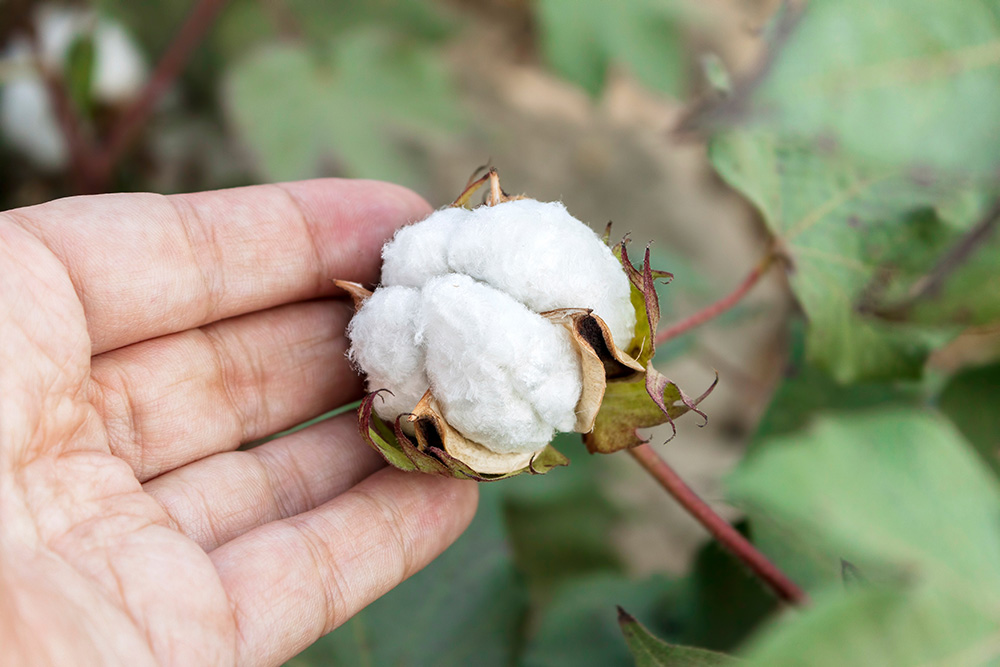
Conventional cotton has a dark side
It is nearly everywhere. In each shopping mall, restaurant, hotel. It is the most used fabric but also the dirtiest one. Cotton. Conventional cotton is grown with the use of chemical substances. The developed countries, like the USA, Canada, Europe are the greatest consumers of it. In 2004, for the first time, the world’s conventional cotton harvest exceeded 21,8 million tonnes. Don’t we love the fabric… However, it is also important to know, that for every hectare of cotton cultivation the farmers use almost 1 kilogram of pesticides (read: poisons).
This is what they don’t tell you about cotton’s origin
When you go to a shopping center, you pass by one store after another. Inside, there are clothes of all colors and sizes. Moreover, different textures and shapes. Each is tempting us to buy, enjoy the smooth touch of a nice cotton dress or shirt. Further, they look so nice, that we rarely think about where these things or fabrics come from, and what they contain. And the truth is, that the facts and figures behind are very dark. Furthermore, the beauty we see in the western world is built on destruction of the developing world.
Let me explain
When we buy a piece of clothing produced, for example, in India, we also inherit its history. It means:
- the way farmers create it,
- the substances they use and
- how it affects them and their surrounding,
are written deep into the fabrics itself. Indeed, in 2005, 97 Indian cotton farmers were studied in a space of 5 months. They were from 3 villages in the southern state of Andhra Pradesh. Within 5 months, while working on cotton fields, they experienced 323 separate occurrences of ill health, from mild to sever poisoning. There are 10 million cotton farmers in India alone. However, the study focused on just 97 of them.
US$ 2 billion for cotton cultivation
Conventional cotton cultivation needs heavy doses of chemical pesticides. Almost 1 kilogram is used on 1 hectare of land under cotton to control pests. For all stages of the crop growth, harvest, production, the farmers and producers use different types of chemicals. Nowadays, over US$ 2 billion dollars is spent on agricultural chemicals each years, of which US$ 819 million covers those highly hazardous (as seen by WHO). Aldicarb, Parathion, Methamidophon, Chlorpyrifos, Dimethoate and more, help cotton grow, but for years, destroy everything around.
Read more about it in our article 100% cotton: a big lie.
What are the negative effects of cotton
Each piece of cotton clothing we buy has a history. When the farmers produce cotton, they rarely use protective clothing. It happens due to their lack of knowledge of the health risks they expose themselves to, (chemical pesticides), illiteracy, hot climate. Human health is one side of the clothing history. Another is in the environment of the cotton fields and area surrounding them. When the farmers in Pakistan for example spray the land with aldicarb, which is a highly hazardous pesticide (according to a WHO list of chemicals), the substances stay on the cotton field.
Moreover, the pollutants impact biodiversity. According to WWF: “Runoff of pesticides, fertilizers, and minerals from cotton fields contaminates rivers, lakes, wetlands, and underground aquifers.” The tragedy for the natural world happens as an immediate toxicity and a long-term accumulation of substances.
The third impact of chemicals is in the fabrics. It is proven, that the pesticides used during cotton production stay in the textiles not only after harvest, but later as well. When you buy a t-shirt made of conventional cotton, the fabric touching your skin has chemical hazardous pesticides in it.
Conventional cotton facts and figures
Once again, when we buy a thing made of cotton, a nice pair of jeans, a skirt, we rarely think of the horrors of people who create them. Majority of cotton production is sold to the developed world, where people live in opulence. However, 99% of world’s cotton farmers live in poverty in developing world: India, Pakistan, Uzbekistan, Mali, South America. They rarely have access to knowledge about the agrochemicals they use. Lack of knowledge is accompanied by no access to protective apparatus, low levels of safety awareness, inadequate safeguards, illiteracy. These lead to poisoning of humans and nature, happening on a daily basis.
The farmers coming from developing world regions create a staggering 75% of global cotton production. It means, that 75% of conventional cotton, which satisfies the world’s desire for the fabric, come from people who mostly severly harm themselves and biodiversity while growing the crop and producing the fabric.
Why is organic cotton better for the environment
Organic cotton has no dark sides like conventional one does. It produces 46% less CO2 than conventional cotton. Moreover, WWF states that, to create just one t-shirt, the farmers need 2 700 litres of water to produce the conventional cotton. To make the same t-shirt, but of organic cotton, it takes only 243 litres! It means more than 10 times less water. Runoff of fertilizers, minerals and pesticides from regular cotton fields pollute underground aquifers, rivers, wetland, oceans, seas and lakes. At the same time, organic crop does not do it. Further, the soil, water and air remain free from the poisons. Furthermore, the seeds here are not genetically modified.
The decision to buy less
To me personally learning about the conventional crop, the way it is produced, how it affects people and biodiversity, changed everything that relates to clothes. The effects of conventional cotton production are not just for now, but for tens of years. It affects the farmers in the distant regions of the world, and us, who use the fabric, nature as well. All of us are in it together. I decided to buy less things of regular cotton, to focus on the greatest quality. Even if I need to wait, to gather enough money to purchase one thing made of extraordinary organic fabric, cotton, linen, it is worth it.
To me, it is crucial to know, that what I use, wear, does not affect my health, by the pesticides in the fabric. It is also important to know, that people who create what I am wearing, are not suffering for me and others, so that we can enjoy our dresses and furnishings. It feels good to know that we are united, as one global family, no matter where we live. Our future is mutual. What we do now, creates what will come. Similarly, if we make our organic mattresses for you, you know that it comes to you with a clear history, no animal, human or land suffers during its production.
Organic mattresses and pillows
Our company, EcoHealthLab focuses directly on organic products. We create organic buckwheat mattresses and pillows, with the fabrics having GOTS certificates, or coming from a trusted source. (Read more about GOTS certificate). Our customers know, that they sleep safely, without harmfull chemicals coming from the regular beds. Their bodies can fully rejuvenate and rest, to be ready for the days to come.
Organic fabrics, organic filling, accompanied by tremendous beauty of a handmade products, create an organic mattress that serves a person for years.



Leave a Reply