
Sleep tips: How to sleep well
Some people just know what to do and what is important. They have the courage to focus on the simplest things to realize their potential. They not only do stuff to achieve, but focus on relationships as well. Not surprisingly, we can learn some great sleep tips from them to help ourselves sleep better. In this article, we dive deep into the phenomenon of sleep, and thoroughly cover all aspects of it we have come across.
The greatest sportsmen (like Cristiano Ronaldo, Rafa Nadal, Roger Federer) are immensely competitive. They want to win, to have fun, feel joy, and because they like to be in the moment. It takes years to achieve personal greatness, to be able to compete, stay calm, feel joy when stress is all around. Read more about it in this article Sleep habits that made them. Those who become the greatest athletes of their sport disciplines, tell their stories and reveal years of work and hardship that preceded the successes. Work, focus, dedication, the right people in life, concentration on health.
As Rapfael Nadal said :
" Endure, put up with whatever comes your way, learn to overcome weakness and pain, push yourself to breaking point but never cave in. If you don't learn that lesson, you'll never succeed as an elite athlete".
Sleep tips: number 1: Be in a state of harmony.
Balance endurance with sleep and relaxation
Endurance is important, and a healthy body and mind are another of the crucial pillars of a happy life. Cristiano Ronaldo is one of those who pay special attention to his health. He understood early on, that to be at his best during football matches, proper sleep was fundamental. Not drugs, massages, but sleep. To know how to sleep well, he hired Niki Littlehales, a sleep trainer.
Trully, reading more about sleep habits of the great sportsmen, is an eye openner. If being one of the greatest footballers in history was connected to sleeping well, we should pay more attention to it.
Our article focuses on several sleep-related facts and ideas, and is packed with valuable sleep tips.
In This Article
The giants of sport love sleeping
Our articles about the sleep habits of the achievers of our time, include the healthy sleep habits of Richard Branson, Cristiano Ronaldo (an underdog who worked like crazy to achieve his dreams), Tim Ferriss. You see, I strongly believe that anything is possible. What we need to do is to follow this idea and work on ourselves.
The sleep habits of the great: Cristiano Ronaldo, Tim Ferriss, Richard Branson reveal what they do to sleep better and how important it is. However, there is something I want to share: Achievements are important, crucial for your sense of purpose in life, but there are other areas of life as well, where sleep also pays a fundamental role. While sleeping, we may choose to share our bed with the loved one, and cuddle in bed. Scientists have proven that it is very healthy. You will read about it in this article as well.
Le Bron james, another underdog, who was talented, but also very very focused and determined. This is key, to not stop. Tips for better sleep, LeBron James sleep system
Let’s learn from Cristiano Ronaldo, and dive into sleep then!

Inspiring sleep methods
Throughout the ages, different people tested themselves and created their unique sleep patterns. We love to dive into those minds and see what results they got. On our blog we talk about the already mentioned Cristiano Ronaldo, Richard Branson, Iga Swiatek, Leonardo da Vinci. Their professional paths may be different, sports, business, arts-creativity, but they have similar traits. Most of all, all of them see sleep as very important. For example for Leonardo da Vinci, sleep was a path to developing his genius. Moreover he observed that the first minutes after waking up were very very creative. His sleep schedule is nowadays known as the polyphatic sleep schedule, read more about it here: da Vinci sleep pattern.
The miracle of sleep
We fly to the Moon, have super fast computers, advanced cars, robots. Internet helps us communicate instantly, yet our knowledge about ourselves, especially about the phenomenon of sleep is still incomplete. The scientists started learning about it just over a hundred years ago.
Sleep, being the foundation of human life, has been an enigma for centuries. We started understanding it in the XX century. We spend a third of our days sleeping, during which the mind remains active. While sleeping, the mind goes through different stages, and sometimes it is as alert as if awaked.
As the years go by, the scientists find more information about sleep, however it remains as fascinating as it was at the beginning of the XX century when we discovered for the first time that the mind was indeed alert while sleeping. What we know for sure is this: Sleep means life and happiness. It is your temple, secret garden of Eden, it is where the great quality of your life can be built or destroyed, depending on our approach to it.
So, how did it all start:
A century ago…
In 1916 and 1917, the global community was going through an epidemic of congestive encephalitis (encephalitis lethargica) which leads to insomnia or excessive sleepiness. Over a million people became ill. An austrian neurologist Constantin von Economo examined their brains, and found that they had different parts damaged, depending on which variation of the illness a patient suffered from, whether it was insomnia or sleepiness. The doctor concluded, that the specific part of the brain which was affected (midbrain), must have been connected with sleep and the state of being awake. It started global fascination with sleep.
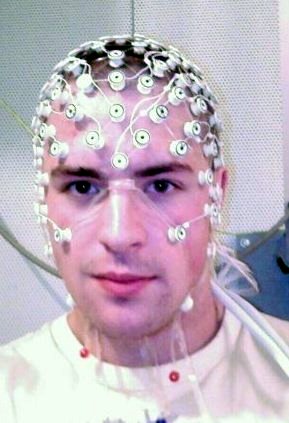
Over ten years later, in 1929 a young German psychiatrist Hans Berger created the first encephalogram (EEG), by attaching electrodes to the heads of the patients. The result was similar to what we have today, paper filled with lines which showed the first scientific mirror of the electric activity of the brain. The scientists were able to see that the brain is fully active, even when the body sleeps.
healthy sleep
Two night cycles that make us. NREM and REM
In our bodies everything works in cycles. You breathe in and you breathe out. You fall asleep and you wake up. Digestion, metabolism, rejuvenation, everything follows a rythm. The same happens when we sleep. There are two basic phases of sleep NREM and REM. Together they last from 90 to 110 minutes. A healthy person, who knows how to sleep well, can experince from 4 to 6 cycles of NREM and REM a night.
The five phases of sleep were discovered in the fifties of the XX century. Four of them are the ones during which our eyes move slowly and are called non-REM (non rapid eye movement, or NREM). They takes us deeper and deeper into sleep. The fifth phase, called REM (rapid eye movement), is the time when we experience dreams.
The enigma of sleep
There is still much to learn about the phenomenon we call sleep. We know now that it affects who we are now and whom we become. That it is the foundation our body and mind are built on.
The secret power
How does sleep affect us then?
It builds good emotional and physical health. Heals emotions, supports memory, fights dementia, weakens stress, protects against weight gain. Helps reduce emotional tension, solve problems, and more.
As it is our natural activity, we can access it at any time. Often we take it for granted, yet it brings better results to our health than almost any drug out there.
The reasearchers at the Harvard Medical School believe that if we give our bodies quality sleep on a consistent basis, our brains will tell us when to fall asleep and when to wake up to fully restore. If we know how to sleep well, our bodies tell us exactly what to do and at what time.
What happens when we don’t sleep enough, as for example in a case of a person with chronic sleep problems, or experiencing stress, the signal of the right time to fall asleep is not being sent by the brain. If it is not sent, the body does not feel the need to fall asleep and as a result, the person remains awake and the internal organs cannot rejuvenate properly before the next day starts.
3 reasons why sleep matters: sleep therapy
Moreover, the researchers say that quality sleep is linked to not only good health, but longevity as well.
Lack of sleep and Four Killers
"Seven out of ten deaths worldwide are caused by just four non-communicable diseases (NCDs), a major new study has found. Cancer, cardiovascular diseases, chronic respiratory diseases, and diabetes killed a global total of 12.5 million people aged 30 to 70 in 2016 alone, according to the researchers."
“The Week”, 21.09.2018
So what is sleep, and what does it mean to have a good night’s sleep?
Sleep is an active state that plays a vital role in the quality and length of your life. It nurtures the physical and mental health. Moreover, it influences your mood, and telomers, which are closely related to longevity. Also, it is the greatest regulator of human health, which ensures regeneration of the brain and the rest of the body. Read more about longevity in our article: 3 ways to look younger fast: how a good night’s sleep affects our lives.
Sleep and longevity
When you sleep, your body produces groth hormone (also called youth hormone), which regenarets skin tissues and the tissues of the entire body, burns fat, builds muscle mass, nails, hair. During sleep another hormone is being produces as well: melatonin, which regulates the sleep-wake timing, and is a powerful antioxidant. Disruption of melatonin production in the body may lead to cancer, as stated by National Center for Biotechnology Information. Longevity is not a myth. It is reality. 12 things you can do to live longer
Dive deeper into sleep tips about longevity, and general longevity, through our articles:
How to look younger fast: a good night’s sleep strategy
Tips for getting a good night’s sleep, how can I relax my mind to sleep shows you 5 helpful tips that can help you calm down before falling asleep.
If you sleep well and enough, the healing hormones are produced and your body gets regulated, but if you don’t sleep enough, the body produces cortizol (stress hormone), which leads to the production of fat tissues, brain reduction, weakening of your immune system and more.
Stress, spine and sleep
You cannot see it, as it is an emotional state. There is no way to touch it, catch it or remove it by force. However, you can feel it, and see the real materialistic results of it on your life and the world. It is stress. Emotional state that we know so well. It can damage our health, shorten telomers, our lives, destroy relationships, plans and jobs. What’s more, it affects human spine and consequently the quality of sleep. How does that destruction happen then?
When we are stressed, the muscles around our spine tighten. Additionally, as a consequence, the blood finds it difficult to flow freely through tissues. Moreover, the oxygen cannot be fully delivered to the muscles in general and those crucial muscles surrounding the spine. What’s more, such poorer blood and oxygen distribution weakens the muscles and spine in general, which influences the strength of the information signals send though the spine to the organs of our bodies. Equally important, it leads to pain in the area of spine and difficulties in sleeping.
Stress, spine and sleep are close to each other. To know more of that connection and how to reverse the damage and start sleeping better, read our thorough article about stress and spine.
Sleep tips: Stress and sleep: the secret power of Body grounding
David Hawkins, a psychiatrist, philisopher, writer, author of several books, including “Letting go: The Pathway of Surrender” (a phenomenal book, I love it and highly recommend) experiened a lot in his life. He and his patients tried many paths to freedom and love. Eventually, he was observing himself in those experiences, to see, that he only felt more confused. Finally what works is feeling what happens, deeply going into what happens in your body, and letting go. Moreover, in simplicity we find power.
Sleep tips: minimalism: The power of connecting to the Earth
Nature that surrounds us, the ground, the air, and our body can work together to help us relax, in a very easy way. Indeed, the answer is in grounding, also called earthing. Finally, it is not only simple, accessible to all of us, good for you and other creatures, but also (according to dr Joseph Mercola) :
- helps balance cortisol production, a hormone known as the hormone of stress, which has a great impact on healthy sleep. When you feel in danger, stressed out, sleeping is difficult, you wake up in the middle of the night.
- controls inflammatory reactions which follow a strenuous training
- minimizes a flight and fight response, and the reaction is connected to prolonged stress, moreover impacts sleep
This is how simple body grounding through for example barefoot walking, impacts us. Eventually, this is one of simple yet powerful sleep tips. Moreover, what we need to know, is that it really works on us, because when you touch the ground, it sends electrons through your legs, that neutralize free radicals in your organism. It is fascinating, we have written several articles about it, just start with the first one: Grounding techniques for anxiety
Cuddling in bed
When it comes to sleeping, almost everything is healthy and brings us pleasure. What’s more, before we fall asleep, we may choose to snuggle with the loved one, for joy and… for health. It is so funny, that the scientists would focus on such details of our lives, but they do. Some people just need to know if cuddling is healthy to do it. And it is. It has many health benefits, which include strenghtened immune system, lower cortisol levels, closer bond with the intimate one and more. When a couple snuggle, they give each other affectionate hugs and warm embraces, which support peaceful sleep throughout the night. Discover the secrets of cuddling in bed in our article “Cuddling in bed changes lives”. It is the same simple truth over and over again: simplicity.

How you sleep defines who you become.
On our blog we share tips and strategies developed over the years that help you improve your experience of sleep or learn how to entirely change the way you sleep. The articles discuss several topics:
How to sleep better at night? Exercise during the day is all about the joy of taking easy exercises. What is fascinating, is that nowadays those who study longevity tells us to exercise lightly.
How to get better sleep at night naturally. A consistent sleep schedule. Is where you find the simple changes you can make right now to create an automatic sleep schedule, that is going to help you relax and become more healthy.
Sleep and hormones
Sleep is a powerful regulator. Our ancestors used to fall asleep late in the evening, and wake up at sunset. Nowadays, artificial light changed our habits and schedules. We can stay awake long into the night. It helps us do more in short term, but unfortunately it also deregulates the metabolic and hormonal systems of our bodies in a long term.
Sleep regulates the levels of:
- melatonin
- youth hormone
- stress hormone
- hormones regulating appetite and weight (leptin)
- hunger hormone (ghrelin)
When you change the time you fall asleep, or do not sleep enough, your hormones stop working correctly. You may put on weight, start aging, become ill.
Sleep quality impacts the tiniest cells of your body. And it has a big influence on you.
Telomers, longevity and what happens if we do not sleep well
It was a very small organism that lives in fresh water. In size tiny, yet it became world famous, when a modest scientist, Elizabeth Blackburn discovered something groundbreaking. In 1975 she saw a part of its internal cell, that occured to be fantastically important to human health. It is the protozoan Tetrahymena thermophila, which has 20 thousand chromosomes in each cell. The scientist discovered that the chromosomes had strange endings, which varied in length. Later research revealed, that the endings of the chromosomes, that we now call Telomers, are crucial to the health of Tetrahymena and its longevity.
Longevity quest and telomers
As tetrahymena, humans also have the telomers. They play a vital role in our general health, of each organ, and can predict the length of our lives. What is important to know, the telomers can shorten, which will then shorten our lives. One of the activities that impact its length is the quality of sleep. In our longevity quest we dive into that connection. Moreover we give suggestions, sleep tips, what to do to have a good night’s sleep and protect the mighty telomers.
Read the entire story here : Longevity quest: sleep and telomers

Diet and sleep
Everything influences everything. It also relates to food, the best time to have your supper, and the food to avoid. The second half of your day is very important when we think about your digestive system. The way it works will impact your general health and sleep. Intestines are here as well. Sugars, proteins, carbohydrates. We do not need to become scientists to know what to choose to eat and at what time. Simple example: if you eat a meal full of sugar late in the evening, you will have troubles sleeping. It relates to your pancreas and insulin production.
Sugar will cause your body to produce insulin which we feel as a surge of energy followed by a sudden drop of it shortly thereafter. It will make you alert and unable to fall asleep. Read more about diet to help sleep here. There are fruts and nuts that will create a great composition for your healthy sleep on the other hand. Know what to choose.
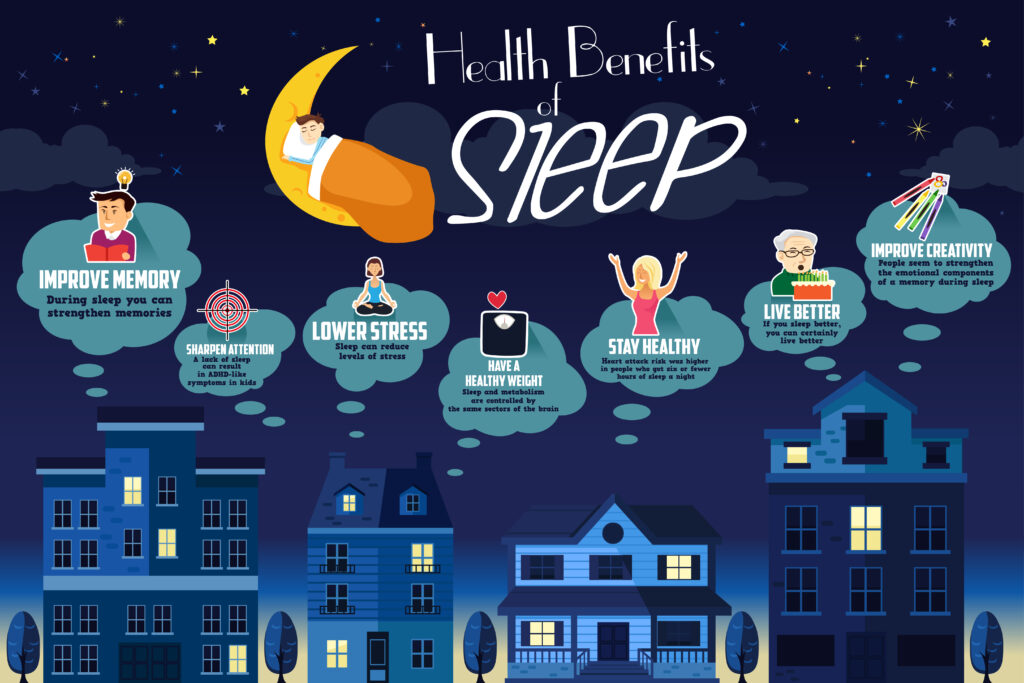
“Scientists are learning that shortchanging sleep can compromise nearly every major body system, from the brain to the heart to the immune system, making our inability—or unwillingness—to sleep enough one of the unhealthiest things we can do.”
“Time”

How great human body is. We are genius creatures
In nature, there are no mistakes. Human heart is designed to pump blood, distribute oxygen and help remove deoxygenated blood, carrying the metabolic waste products from the cells of the body. The lungs are busy breathing, which means that the oxygen enters the blood, and the carbon dioxide is removed from the blood. The skin, the hair, the teeth, the eyes, and the bones, each of the parts is perfectly designed to play a vital role in the process called life. Constructed in our bodies in a way, to use as little energy as possible, and produce the greatest results. We are also the healthiest, if we sleep around eight hours a night.
If nature designed human body to sleep eight hours a night, there must be gold of information hidden in it. The third of our lives spent on sleeping, instead of enjoying, building, talking, watching or doing anything else. It still puzzles the scientists, as our knowledge of the importance of sleep is at its infancy.
However the question “how to have agood night’s sleep” can be answered properly, helping those of us focused on rising life quality.
Books about sleep packed with sleep tips
There are great books about sleep. We recommend:
Paul McKenna “I can make you sleep”, which focuses on our wholeness as human beings, and shows that sleep is a part of multiple processes happening in our body at the same time. According to the author, if we want to influence sleep and have a good night’s sleep night after night, we should work on several areas of our lives. A great book. Read its review here
Dave Asprey “Super Human”. We wrote about the book several times, as it is a great compedium of knowledge about many aspects of human health and longevity. Sleep is one of the key chapters there.
People who teach us about sleep
Our world is full of mentores, teachers, or simply people who say they know. First: Facts, conclusions. Second: that is why, it is of key importance, to choose those few that we trust and learn from, who have knowledge, good judgement and are interesting to listen to. Whom do we follow in the field of sleep?
Russell Foster: author of several books on the subject of sleep, Commander of the Order of the British Empire in 2015 for his services to science. Moreover, a British professor of circadian neuroscience, who researches sleep and it’s impact on our daily lives. Finally, his suggests that sleep is our healing tool. Read more about him and his findings in our article : A heaven for sleep. What is fascinating, his sleep tips include: “Our ignorance about sleep is quite profound“


Leave a Reply