

A secret to a long life revealed by older sportsmen
By incident I stumbled upon a phenomenal truth, a secret to a long life. Based on facts, centuries old and proven, obvious, but in use by just some of us… It came as a result of a research I conducted among my senior friends. They come from different backgrounds and cities, have distinctly different lives, but fortunately a few strong things in common.
I asked them about their recipe for a longer life, and watched their daily habits. I noticed that the fundamental, crucial activities leading to greater health, were common among them, as if they were obvious. They did them not because they knew of the future benefits of such choices, but rather because they had to.
We have access to the rare jewel, but…
We tend to ignore what seems obvious. Moreover, we expect complex systems to help us live long. This is simply why so few people know and use what these older persons have perfected throughout the years. Accustomed to complex cures based on chemical drugs, we forget about what has worked for centuries. These solutions can help us be so much stronger and healthier. The secret to a long life is in fact… so simple, that you may even laugh.
My friends are quite healthy. They look on average 20 to 10 years younger than what their chronological age says. Moreover, they were born and grew up in a world that was cleaner and less polluted when compared with our environment nowadays. The food at that time contained less chemicals and had more nutrients, making it much more energetic than what we mostly have nowadays.
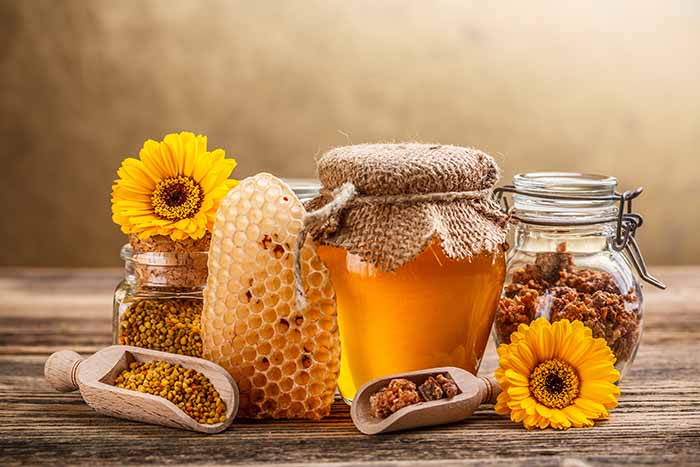
Still life with honey, honeycomb, pollen and propolis
Food that only looks like food
Following the Guardian, one of the major UK newspapers:
David Thomas – a geologist turned chiropractor (who also happens to sell mineral supplements) – analysed data from McCance and Widdowson’s epic work, The Composition of Foods (a reference manual republished and updated by Government biochemists every few years). During that 51-year period, potatoes appeared to have lost 47 per cent of their copper, 45 per cent of their iron and 35 per cent of their calcium while carrots showed even bigger declines. Broccoli – a ‘superfood’ rich in micronutrients and cancer-busting antioxidants – suffered an 80 per cent drop in copper while calcium content was a quarter of what it had been in 1940, a pattern repeated in tomatoes. As Thomas pointed out: ‘You would need to have eaten 10 tomatoes in 1991 to have obtained the same copper intake as from one tomato in 1940.’
The food you eat can age you
What the article does not say, is a major conclusion. If the fruits and vegetables we eat nowadays are so much less nutritious, we need to eat more carrots to deliver the same amount of vitamins, etc. And the more we eat, the more energy our bodies need to digest the food! The more energy spent, the more “tired” our internal organs become and the faster they age.
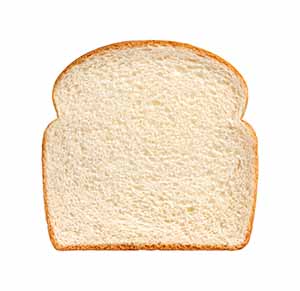
white bread
For example: I tested how I felt and how much energy I had after eating white bread vs the dark whole bread. I was soon hungry after swallowing two slices of white bread. But the dark one kept me strong for much longer.
The secret to a long life
The major conclusion is, if you eat more, your body will spend more energy on digesting the food. The more energy spent on this process, the less there is on other vital processes. Nature: animals, plants focus on sawing energy. Energy is life.
My friends all ate little, but the food they ate, was highly nutritious! This is the key, the secret ingredient. They were all very sportive, climbed and skied, ran and stretched. Nowadays they are slim, and still do not over eat. The secret to a long life is in letting your internal organs rest a little, by swallowing less food.

Fantastic nutritious food
One of the secrets of the longest living people on earth
The conclusion is: just like our grandfathers and mothers, we can apply this very successful and beneficial thought: to eat little, but the very best we can find. If you eat one organic carrot instead of 10 non-organic ones, your digestive system will have much less to do. Not as much, but satisfied, it will be still fueled with the vitamins, nutrients so important to the growth and survival of our internal organs. Less energy spent on the internal work equals a longer life in perspective. The same applies to water. If you add lemon juice to it and drink it, your body will have to spend more energy on digesting the drink. Why? Because it will have to first remove the juice from water and then treat different “foods” separately. Read more about it in our article : “Structured water – a key to health“.
It is a very simple idea, but powerful beyond measure. All of those dear to me senior people have followed it.
The magic of eating less
There are two well-known trials conducted to see the effect an eat-less diet has on a human or animal body. One known as “Calerie trial”, and another started to check calorie restriction and ageing in Rhesus monkeys (we share 93% of our DNA with the species, and also we age in a similar fashion). (Very important: we do not support any trials conducted on animals, it violates their rights and well-being).
Both trials brought results:
The Carelie trial (the Comprehensive Assessment of Long-Term Effects of Reducing Intake of Energy trial, lead by Susan Roberts, a dietary scientist at Tufts University in Boston. The program lasted for over two years, for a group of 218 healthy persons of both sexes (aged between 21 and 50 years), who formed two groups. The difference was “only” the amount of food consumed. In one group people could eat as they normally would, while the other ate 25% less (CR). All of them had health checks every six months.
way to health
Eating less, a secret to a long life
After a period of two years, the researchers found that (as BBC reports) those who ate less calories showed signs of health improvements. They were especially in the area of insulin, cancer, blood pressure:
“the ratio of “good” cholesterol to “bad” cholesterol had increased, molecules associated with tumor formation – called tumor necrosis factors (TNFs) – were reduced by around 25%, and levels of insulin resistance, a sure sign of diabetes, fell by nearly 40% compared to people who ate their normal diets. Overall, the blood’s pressure was lower.” BBC
The study on the Rhesus monkeys, lead by the scientists of the University of Wisconsin, was conducted for a period of over 37 years. The monkeys were also split into two groups. One ate like they normally are, and the other ate 30% less. They were fed with specially made biscuits, full of nutrients and minerals.
He broke all the records
The results were astounding. For example one monkey named Sherman from the “eating less group” reached the age of 43! It makes him the oldest Rhesus monkey ever recorded. A normal lifespan for his species (in captivity) is over 20 years less!
“CR monkeys look remarkably younger – with more hair, less sag, and brown instead of grey – than monkeys that were fed a standard diet, they were healthier on the inside too, free from pathology. Cancers, such as the common intestinal adenocarcinoma, were reduced by over 50%. The risk of heart disease was similarly halved. And while 11 of the eating normally monkeys developed diabetes and five exhibited signs that they were pre-diabetic, the blood glucose regulation seemed healthy in all CR monkeys. For them, diabetes wasn’t a thing.” as the scientists reported.
The researchers are far from suggesting that we all should reduce our meals. However, the results show already, what my older friends proved in their lives: Eating less is a way to a longer and healthier life.
Question everything
Ps. There are countless diets, which focus on eating less calories. It basically leads to eating more of low in calories foods. My healthy senior friends did the opposite. They chose great food, full of nutrients, that allowed them eat just one piece instead of ten.
Ps. To enjoy more of your life, we suggest also focusing on healthy sleep. EcoHealthLAB offers the best organic beds and pillows to support your spine and neck. Check them now and see how others have reviewed them. Reviews
http://www.bbc.com/future/story/20170601-the-secret-to-a-long-and-healthy-life-eat-less
https://www.theguardian.com/lifeandstyle/2005/may/15/foodanddrink.shopping3
https://www.nature.com/articles/ncomms14063
https://www.ncbi.nlm.nih.gov/pubmed/26187233



Leave a Reply