
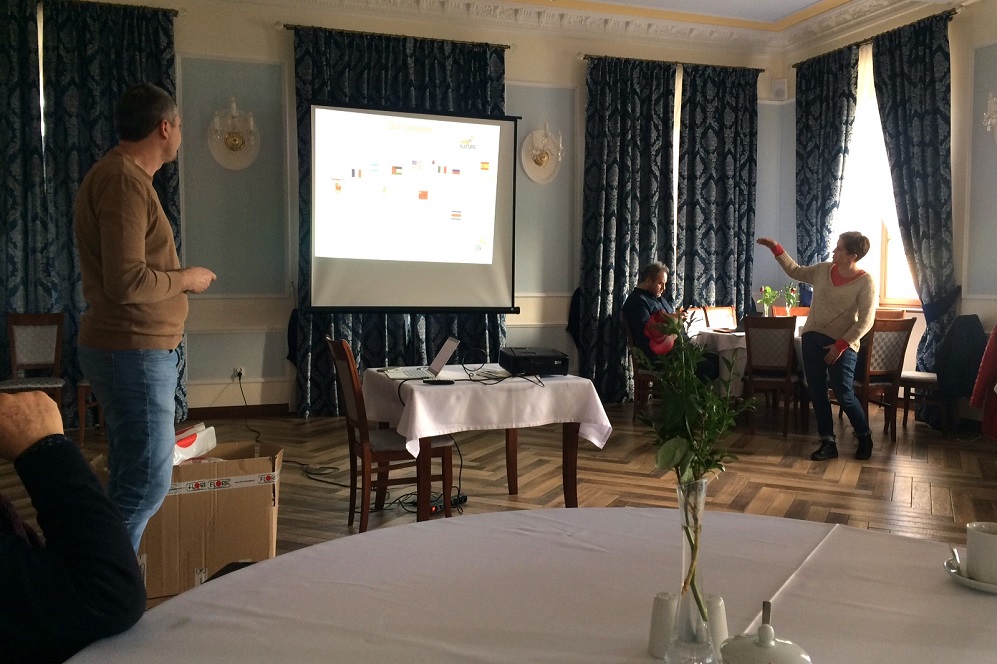
Organic fertilizer for plants and agriculture, EcoHealthLab at a conference
Podcast: Play in new window | Download (Duration: 7:45 — 11.5MB)
Is everything possible? I do not know about you, but I believe that it is. Today we will share our recent experience of discovering something, that several years ago seemed impossible: Organic farming, that supports soil and natural organisms on large scale. Moreover, that an organic fertilizer for plants and agriculture, that the farmers can use on a large scale is now avaiable. What I want you to take from this article, are at least two ideas. First, that everything is possible, just sometimes things need time and second: that we can take care of our natural habitat and help it restore itself. This is what we learned during a great conference about organic farming for larger and smaller farms and fields.
Impossible? think twice
Just think about this: when in 1962 Rachel Carson published her now famous book “Silent Spring”, the world was just beginning to learn about the horrific consequences of farming on large scale, where farmers used pesticides to manage weeds and insects. Brave Rachel described it all in her book, showing what the costs to people and natural world were. Death of birds, bees, contaminated rivers and land, impacted health. Further, she said, that that path would lead to a silent spring, without any songs of birds or insects, because all would vanish as a consequence of pesticides on the fields.
What are the pesticides
These are chemical substances that the farmers use to control the growth of weeds and insects during the crop development. (one of them, aldicarb for cotton, is so poisonous, that if a drop of it fell on your skin, it could kill you). There are herbicides and insecticides. As we described in a series of articles, regular cotton production for example, uses at least 1 kilogram for every hectare of land with cotton. The cost of the agrochemicals used exceeds US $2 billion each year… (“Environmental Justice foundation”). But, what if it was possible to do farming without them? We still need food and clothing, so farming will not stop.
The path to the future for all
To hear about organic farming development, we took part in a conference on 15th of February this year, in a small yet very beautiful palace placed in a Lubiechowa village in Poland. There, a company, that sells fertilizers and also promotes ecological companies, Flora-Praszka, described what an organic fertilizer for plants and organic farming for agriculture and gardening is. This will be a brief summary of the event, more in the comming articles. One thing: The event was very interesting, and I sat there for over 5 hours! I felt fascinated by the shared knowledge. Best organic fertilizer for vegetables and agriculture? There are great products out there, that we have been waiting for, for tens of years.
Rachel Carson would be hopeful
She knew stuff. As she did, we as well wrote about natural cotton several times in our blog, describing the pesticides, herbicides the companies use for its cultivation and production. Natural cotton (also: regular cotton), first and foremost, it is one of the most toxic plants and products in the world, due to the chemicals used during its growth and production. Countries that harvest it are impacted heavily. India, Uzbekistan, Pakistan, China and other, have their land destroyed, with chemicals present in drinking water, land, air, food and human tissues. Uzbekistan is still polluted by the toxic agrochemicals used there over 50 years ago.
Read more about it here:
The pesticides regular cotton requires contaminate rivers in the USA, Uzbekistan, India, Pakistan, Australia, Brazil, Greece, West Africa. To create a t-shirt, pair of jeans or other products, the farmers use chemical insecticides as well. The amount is staggering: over 16% of all globally used insecticides go to cotton fields. It is a process, that happens non stop around the world. We do not see it, but the future will.
The conference shows another beautiful reality
However, as the contamination process continues, there is another one, developing simultaneously: the development of the organic fertilizers, pesticides. It is becoming real to do agriculture and farming differently, without destroying the land, water and affecting ecosystem. This is what the fascinating to me conference was about!
The conference
Three presenters took stage. I was most surprised and fascinated by what the third one was saying: Organic farming at the heart of an Italian company “Hello nature”. I love Italy, I hope you do to. Their food, art, architecture, history and sea make me smile, but they also are a country of innovation. “Hello nature” have been working on developing organic fertilizers since 1971, and are present in over 80 countries around the world with their products that help farmers, crops and soil at the same time!
International benchmark for sustainable agriculture
It was fascinating to me to hear about their products. Especially that each and every one supports the growth of healthy soil and does not affect animals or insects. They help plants, crops absorb nutrients through their leaves, the plants grow bigger and stronger. Moreover, two of the natural processes that they introduce are mycorrhiza and trichoderma. These two strangly sounding processes help form connections with plant roots, which leads to a better plant nutrition and resistance to difficulties resulting from the natural environment. They also offer organic chicken manure pellets.
I will go into depth about these processes in the future articles, as they may help so many of us choose thr right products for our gardens and fields. Simply because an organic fertilizer for plants is here and accessible.
Organic fertilizer for plants for the future
Why does it fascinate us so much at our company? If we think about the future, we may think and imagine the best scenario, unity of all beings, healthy land and water. We humans are a part of the ecosystem, not the masters of it. Nature does not contaminate what it uses. The organisms cooperate, but humans don’t. If humans build a factory, it often destroys the surrounding land and communities. This pollution stays for years, leads people and other beings to destruction and depression. It does not have to be like this. Nature shows us the way. It’s way, without toxic waste-products, but with everything becoming food for other organisms. This is what we love to write about in our blog. This is the future of our planet.
Reference links



Leave a Reply