
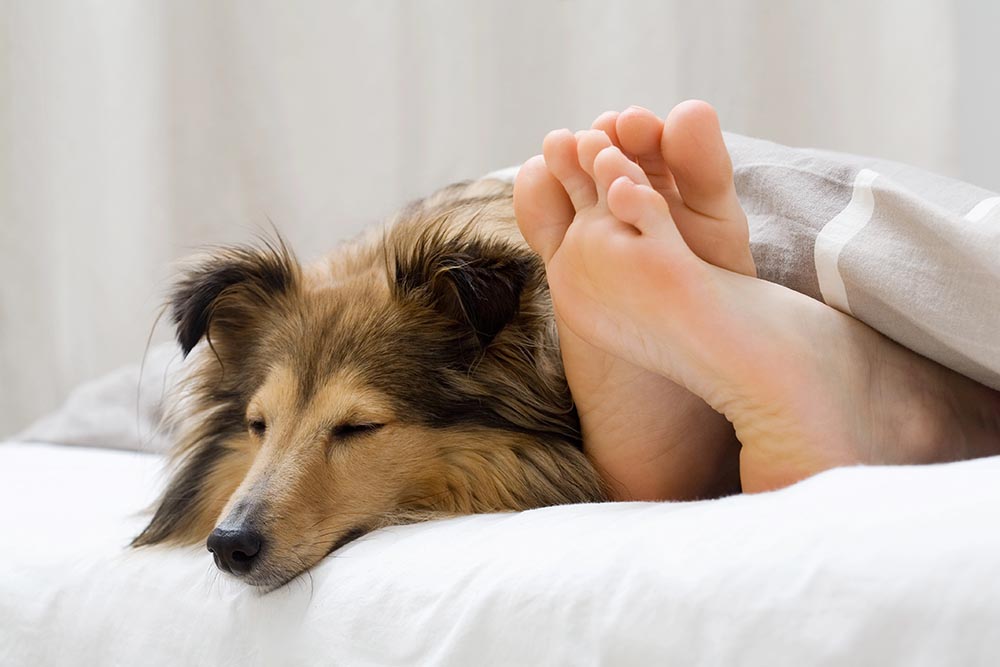
Secrets of the animal world: do all animals sleep?
One of my favorite statements, is one that says: “Question everything”. This is what a child would do, out of curiosity and necessity to learn everything and to live. It would say: “Do all animals sleep?”, “Can I touch the sky?”, “Is anything possible?”. But we change it when we grow up. In our complex lives we simplify by assuming that something is the way other things are. So we save time, that would otherwise be spent on experience and discovering how things truly are. However at the same time … we risk being mistaken and making false assumptions.
It is difficult to know and discover everything, but at least we can question, just like children do. They discover the world, learn to walk, stand, talk and eat, and while doing that ask millions of questions. Let’s take one example. Humans need to sleep. If we don’t, we die. Moreover, it is necessary to our recovery and brain functionality. We may assume, that it is the same for animals. Question would be: “Do all animals sleep?” and here comes a surprise…
Because not all of them sleep, or at least not in a way we do! Do all animals sleep? well, let’s find out.
If we did not ask, we would never know. Let’s take a seal. It spends most of its time in water, however it needs to breathe. How do seals sleep? And where? It turns out, that they do, but very differently to us humans. Seals have no homes to detach from the world at night. Their bodies are soft, and delicate. The animal have very limited capacity to protect itself from predators, instead of speed and flexibility when swimming. However there is no speed when sleeping. So, how do they do it?
Humans need more or less 8 hours of uninterrupted sleep. But seals wake up after half an hour after falling asleep, to take some fresh air into their lungs (for the baby seals it is 15 minutes), as they sleep under water. Moreover, they close their nostrils with a flap and shut down half of their brains. The other half is awake.
No sleep, no energy
If we followed this pattern, we would most likely die or at least become very ill. Just like a colleague of mine who has troubles sleeping. She wakes up in the middle of the night, and then falls asleep again. She used to be a person full of energy and vitality, but some of it is gone. This is what happens, when your sleep is interrupted. You have less energy, impaired ability to concentrate, weaker problem-solving skills. Moreover, it leads to mitochondrial dysfunction (the energy centers of your cells). Further, just one night of troubled sleep causes damage to the body that requires repair. The consequences of not sleeping look serious and in fact are.
But seals feel perfect sleeping this way. Is it the same with other sea and ocean creatures? Well, not so! And it is where everything gets fascinating. As it looks like, that there are multiple factors that influence the way a creature sleeps.
Then… how do dolphins sleep?
There are similarities between seals and dolphins. The later also rests only half of their brains while the other remains active. It changes every couple of hours. It is called unihemispheric slow-wave sleep. Its purpose is to help the animal be alert to possible dangers, consciously control breathing (their breathing is not automatic!, they need to decide when to breathe) and keep the social bonds. What body position serves them best while sleeping?
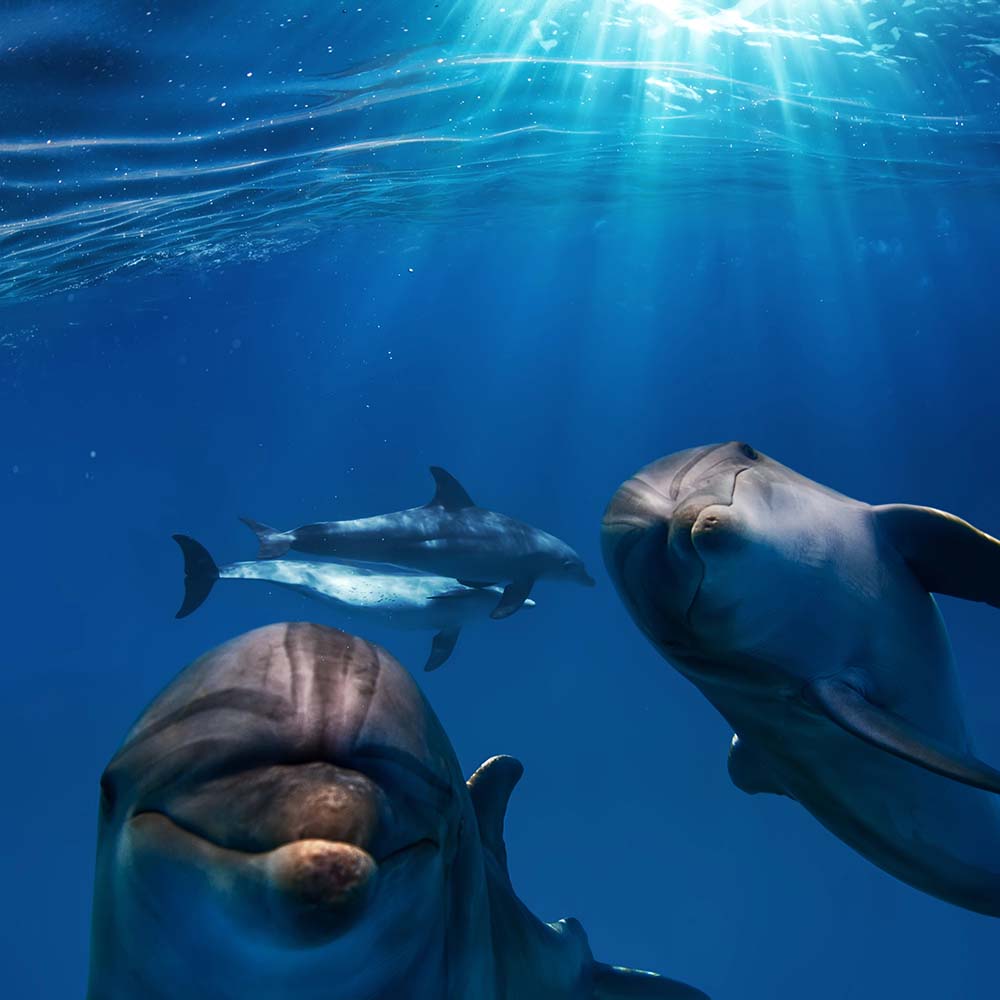
It is also interesting, as they may lay underwater close to its surface, rest horizontally or vertically, Moreover the dolphins can sleep at the surface of water. When you see them doing this, do not mistake them with a log 🙂 With one eye open and the other closed, they float only like the dolphins can, with grace like a ballerina.
But, what about fish? And especially a parrotfish?
This one is also super cautious of danger while sleeping. It lives in warm and salty sea water, among the coral reef. As it is small and fragile, each night it builds a home for itself. Nature is on the way 🙂 When the night comes the parrotfish creates a bubble of saliva and hides in it. In the morning it bursts and floats back out into the world. The mucous cocoon hides their scent as well. What amazes is their protective mechanisms they developed in the course of evolution.
The parrotfish sleeps alone, but there are birds who love the company. How does a pelican sleep?
The creature likes to live in a group of pelicans. Safety at night or even while napping during a day is one of their core necessities. If it is unsafe, one of the birds is awake and attentive to the surroundings. A pelican would stand or lie on its belly. The unihemispheric sleep known from the dolphins and seals is also what the pelicans do. They shut down one of the halves of their brains and the other remains alert. safety safety is the key here. The bird would hide its head under its wing and in the darkness of this shadow fall asleep 🙂 Before it wakes up and flies for miles again, looking on the world from above.
One of the sweetest animals of all, sea otter loves to swim with its offspring on a belly
The animal loves water. Otherwise why would it spend nearly an entire live in it? 🙂 Moreover, it is a very social being, which likes to sleep in groups, called rafts. You can find from 10 to even a 1000 sea otters there. They look friendly, and it is how they sleep: floating either on their backs or bellies at the surface of water, holding each other paws or wrapping themselves in kelp. Being close to each other at night while sleeping helps them conserve energy, stay warm, and safe from predators. And where is their offspring then? On the mother’s belly 🙂
Yes, these animals are delicate and fragile. But how does a true predator, mighty polar bear sleep?
A lower of cold and white areas who is not afraid of winter storms has his dream home in winter. Global warming creates a serious threat to their survival, as the polar bears need to swim on an ice floe. They also fall asleep and rest there. A polar bear waiting for her cubs to be born makes a hiding place in the snow and sleeps there for a long time. When a snow storm covers the arctic area in a white shade, the animal would hide itself under snow and peacefully wait covered by a blanket of snow. What’s interesting, they sleep from 7 to 8 hours a day and can even take naps (1 to 2 hours) after a satisfying meal.
This is what dogs do as well. After eating they gladly take naps, as an addition to their sleep at night.
A Dog… one of our greatest friends. A wonderful being, that is built of love nearly. How much do dogs sleep? Our faithful companion can sleep almost all the time, with an interruption for eating and walks. However, only a small part of it is spent on truly deep sleep. Dogs experience both phases of sleep as we humans do, REM (dreaming) and non-REM sleep patterns. If you are a dog owner, you very likely saw how dogs dream, as they may bark while sleeping, run or eat, or do anything else, like smiling.
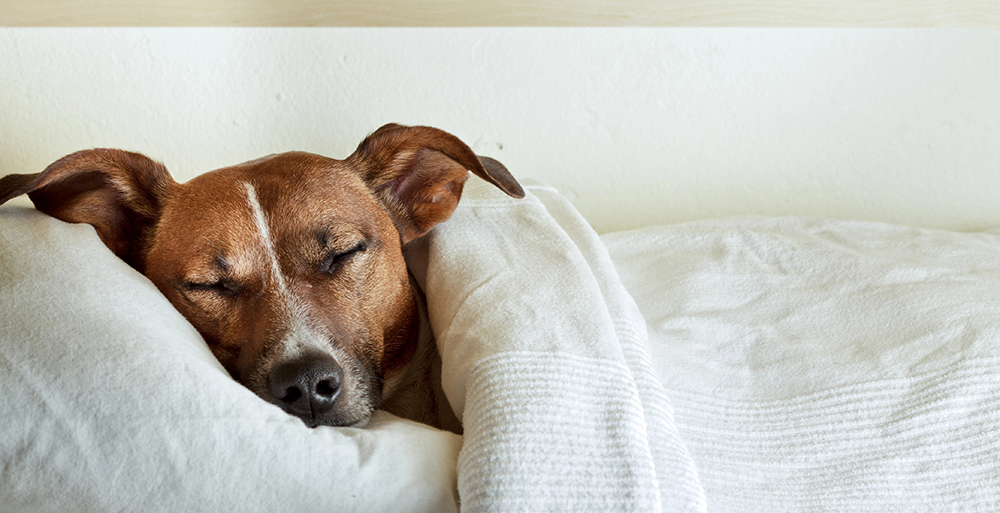
For us humans sleep is necessary to consolidate memories, minimize stress, repair and rejuvenate. The same happens for a dog. The amazing fact is that dogs learn while sleeping, and his or her muscles, tissues repair at that time too.
But… what about the dogs opponent, a cat? How do cats sleep?
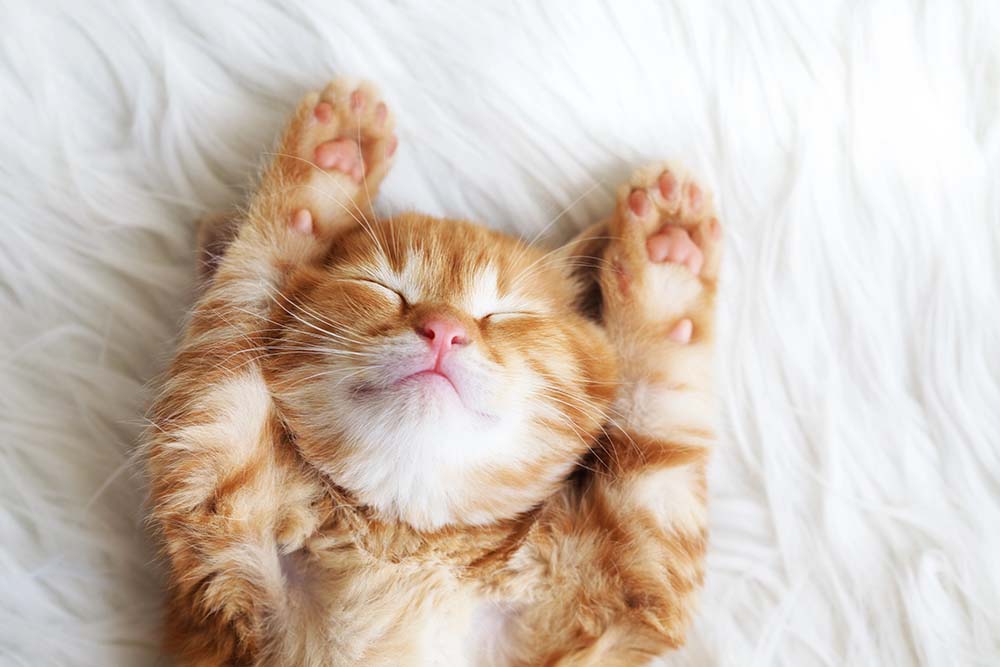
Similar to dogs, a cat can fall asleep almost anywhere, on a table, chair, floor. It also spends on it most of the day, up to 16 hours! This is based on the fact that they need to process information, conserve energy, repair their tissues. They may sleep in a variety of positions, on their belly, side, with paws tucked under their body. However, the greatest trust a cat has for you, is seen when a cat sleep with his or her belly up. It is a vulnerable position.
Even if some people think that cats and foxes are similar, they are wrong. Foxes come from a family Canidade, which includes dogs 🙂
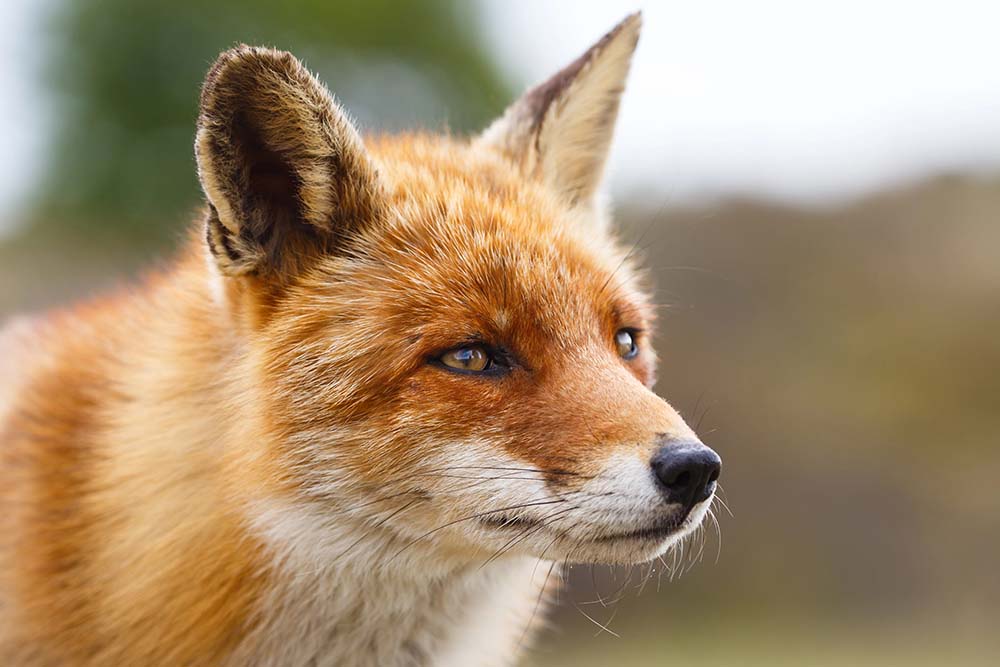
Foxes. Beautiful, wild and secretive. They have a tail and fur that looks like the tree leaves during fall. We can hardly see them during days, because it is when they are sleeping, as they need to be alert at night, to hunt. How do they sleep? In a curled-up position, often with their tail placed under their heads or around their bodies for warmth. They would gladly take a nap too.
But, what about the areas that are far from cold, and are the hottest on Earth? The deserts.
Camels are there to face some of the most challenging of weather circumstances. Extreme heat, that for humans is unbearable. We find it very difficult to walk on such burning hot sand, but the camels don’t. Moreover, they can sleep on hot sand. How do they do it? First, it does not lie on its side or belly, but on the legs, as they have heat-resistant pads on their knees, elbows, sternum and feet. They sleep up to 7 hours, of which only a small part is spent in deep sleep.
The differences that unite
The differences make our world so fascinating and beautiful. In our human global community, even if all of us need to sleep, we differ from each other, in the way we feel, experience things, relate to each other and in many other areas of our lives. One person may react with optimism to a difficult situation, feel creative and ready to start dealing with it, while the other may even say” Why bother, it is impossible”.
For example, this is what happened in the past when runners tried running fast. There was a conviction that a human being cannot run one mile in less than 4 minutes. Nobody did that and people just accepted that “fact”. Until Roger Bannister came and proved them wrong on 6 May 1954, when he finished the mile run in 3 minutes and 59.4 seconds. After his achievement many people were able to do it even faster than him, because they finally saw that it was possible.
Biomimicry is a field that focuses on the phenomenon of nature, its similarities, differences and genius present in each and every organism. Read more in our article “Biomimicry: one idea that changes the future”
When we see how do animals sleep, a powerful observations comes along
Each and every one of us had differences, just like in the animal world. The path is to love the differences just as much as the similarities and to be grateful for them, as they build bridges between people. When you discover something about the other person, you have this chance of getting to know the other more. His or her rich inner world, and by this becoming intimate with people and the world, with its complexity and differences. At the same time knowing that these similarities and differences are on the surface only, covering the heart of things: experiencing each other, loving each other and through this going into the unknown of who we really are, and the world we live in.
What we know is only a tiny part of what is. The discovery of the true richness of life hides in the unknown. Emptiness and silence of the mind, and trust in the heart.
Do all animals sleep? Well, no, they differ greatly 🙂
reference links
Science direct



Leave a Reply