
The healing power of plants: buckwheat and buckwheat hulls
What is buckwheat?
People in the modern society are highly curious about buckwheat. Buckwheat is a triangular shaped seed that delivers various benefits. Although the name sounds ‘wheat’, buckwheat is not a member of the wheat family. Contrary to the common wrongful assumption, buckwheat is not a grain; it is seed (of a fruit). Buckwheat comes with a very sturdy and lasting shell which will be removed before the seed is used.

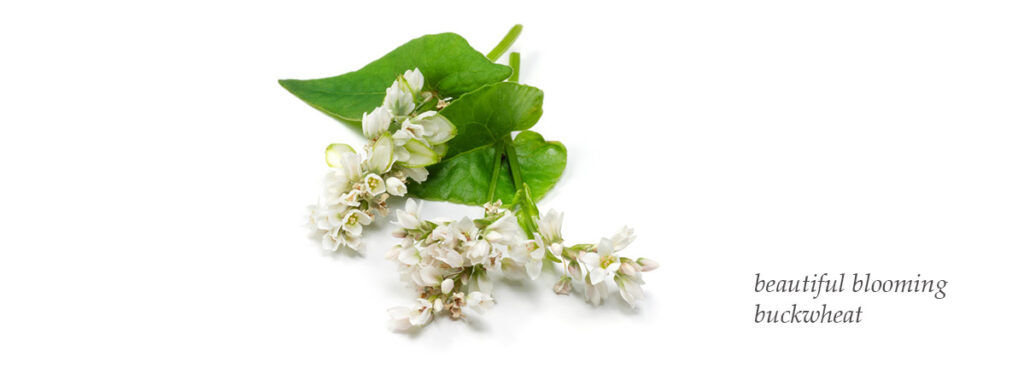
Buckwheat husk flowers in closeup
Buckwheat is a popular crop in many countries particular in Europe and the USA. The popularity of the particular crop increased massively after 1970 when nutrition experts revealed its health benefits.
Nutritional facts of buckwheat
Since buckwheat is not actually ‘wheat’, it has remarkably low gluten levels. This is why buckwheat is recommended as an extremely effective substitute for those who don’t tolerate gluten. It works as a perfect alternative to rise. Also, ground buckwheat is an alternative to flour. Buckwheat is high in nutrients; studies show that buckwheat contains more fiber than oatmeal.

buckwheat recipes
Both cooked and roasted buckwheat contains considerable amount of nutrients. For instance, a single cup of roasted buckwheat (Kasha) contains 154 calories, 6g of protein, 1g of fat, 33 g of carbohydrates, 5g of dietary fiber and various other nutrients. In general, roasted buckwheat is richer in both dietary fibers and carbohydrates. When it comes to cooked buckwheat, each cup contains 85mg of magnesium, 0.25 mg of copper, 117 mg of prosperous, 0.68 mg of manganese and various other essentials minerals.
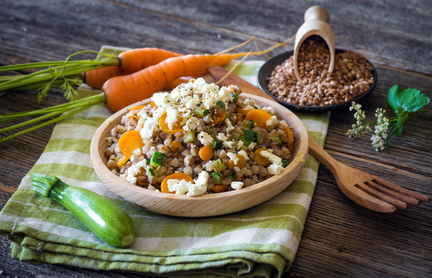
buckwheat recipes
Health benefits of buckwheat are numerous. Both cooked and roasted buckwheat can provide dietary fibers that are healthy for the human digestive system. These fibers are capable of helping you to help weight management and have a control about blood sugar and cholesterol levels. Buckwheat is considered to be one of the most nutritious and healthiest foods. If you add more buckwheat to your diet on regular basis, you can expect various health benefits.
Try it!
Heath benefits of buckwheat
Other than the nutritional facts, there are various other health benefits of buckwheat. Buckwheat shells (often called buckwheat hulls) are becoming increasingly popular as a filling for mattresses, pillows and neck pillows. Buckwheat filling is considered to be one of the healthiest options in the modern world.
Benefits of buckwheat pillows are numerous. Since buckwheat filling consists of organic buckwheat hulls that are perfectly cleaned using natural ways, they are:
- completely safe for human use (unlike regular synthetic fillings).
- Buckwheat hull pillows and mattresses don’t retain memory;
- they adjust according to your neck and head position every time you sleep on them.
- Individual shells (hulls) gently massage your body and stimulate the muscles.
- When it comes to more buckwheat pillow benefits, they offer relief from migraine, neck pain and many other issues.
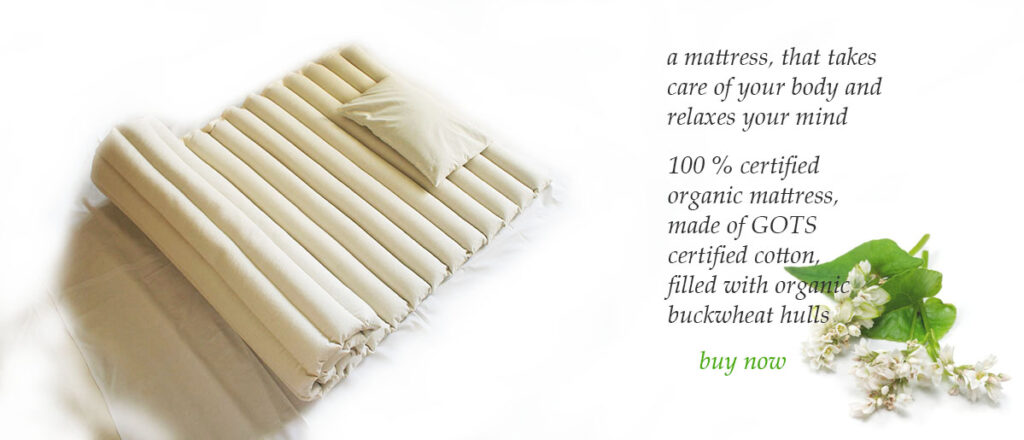
organic buckwheat mattress
There are various buckwheat mattress benefits compared to conventional mattresses; they are:
- non-toxic,
- anti-allergic
- pest resistant by nature.
Generally, both pillows and mattresses with buckwheat hulls filling have longer lifespan; you don’t want to replace them frequently just like you have to do with conventional products.
Try a buckwheat husk mattress or a buckwheat hulls pillow now! 🙂 Visit our store and for those reading this article, we offer a 10% discout during the months of April, for all or our products! Use a coupon code: GreenSpring
Follow the link EcoHealthLab
Find out more about a buckwheat mattress by checking out our popular mattresses, created to help you enhance your health. To read more, click here.
Are you interested in the Healing Power of Plants? Discover more by reading other articles in the “Healing Power of Plants” series!



Hello Martyna, I love your website! I grow Buckwheat on my organic farm. I dehull the bukwheat then make either a “Grit Like” cereal or make a fancy white flour on my stone mill. Both tastes great. My questions to you are: How does hull removal affect the cereal and flour health benefits? What health benefits could one expect from using “stone ground” buckwheat hulls sprinkled on various foods or salads? Thank you, Vincent
Dear Vincent
Thank you so much for your kind words and questions. I appreciate them and it feels great to know that you love our website. It is calm, like I feel, and hope to send it to others.
It is great to know that you grow buckwheat on your farm. Where are you located?
1. How does hull removal affect the cereal and flour health benefits?
The hull protects the inner grain, and when it is removed and the grain is ground, it opens, and undergoes oxidation processes. The moment of opening the grain is crucial, as this is when it starts to lose its nutrients and minerals. It does not happen fast, but the specialists say that the oxidation really starts to speed up after 6 months. This is what is important, to remember about the nutrients and minerals contained in flakes and flour and the time since the entire grain was opened.
Removing the hull does not start the oxidation processes, because the inner grain is still in its integrity.
2. What health benefits could one expect from using “stone ground” buckwheat hulls sprinkled on various food or salads?
They contain rutin (a natural compound that strengthens the immune system, and is an antioxidant. It slows down the oxidation of vitamin C, has anti-inflammatory properties), tannins (compounds with anti-inflammatory properties that inhibit the growth of bacteria and mites), , cellulose-lignin compounds, organic acids and mineral salts. Moreover it contains fiber (81,5 grams for 100 grams of hulls: which has a positive effect on the digestive system and cleanses the intestines), vitamins (silicon, zinc, iron, copper, selenium, calcium, manganese, potassium or magnesium, contains niacin (vitamin B3), folic acid (vitamin B9), and other B vitamins. It also contains vitamin E) and bioelements. It protects against free radicals, which is important for longevity and cancer prevention.
Sending the best wishes
thankn you
Martyna
How do you dehull the buckwheat?
I have a Spice company in PA. I make blends that contain Buckwheat Hulls Ground for many years, are they edible? Please help.
Dear Tina
Buckwheat hulls ground is edible. But its health value depends on the buckwheat hulls source. If it is organic, it is very healthy, thanks to the content of B vitamins (B1, B2, B6) and vitamins PP and P. It can be widely used with positive effects on the body. Moreover, it contains minerals such as zinc, copper, iron, manganese, potassium, phosphorus and bromine, as well as cobalt and platinum, which are extremely important in the proper functioning of many of our organs.
We would love to see your company, and we wish you luck with it!
Be well
Martyna Bizdra